

Your Position: Home - Wire Mesh - Ultimate Guide to Metal Woven Wire Mesh Screen
A metal woven wire mesh screen is a highly versatile material made by weaving metal wires into a grid-like structure. It’s widely used across industries because of its strength, durability, and adaptability. The weaving process creates precise openings, making it ideal for filtration, separation, and protection tasks.
Simply put, if you’ve ever seen a screen that filters particles or protects machinery, chances are it’s a metal woven wire mesh screen.
In today’s fast-paced industrial world, efficiency and reliability matter more than ever. That’s where the metal woven wire mesh screen shines. From construction to food processing, it plays a crucial role in ensuring safety, quality, and performance.
Moreover, industries are increasingly looking for materials that are both durable and sustainable. This screen checks both boxes, making it a go-to solution globally.
One of the standout features of a metal woven wire mesh screen is its incredible strength. Thanks to tightly woven metal wires, it can withstand high pressure, heavy loads, and extreme conditions.
In fact, many industries rely on it precisely because it doesn’t fail under stress.
Depending on the material used, especially stainless steel, these screens offer excellent resistance to rust and corrosion. This makes them perfect for outdoor and marine environments.
Despite being strong, a metal woven wire mesh screen is surprisingly flexible. It can be shaped, cut, and customized to fit various applications, which makes it incredibly versatile.
The plain weave is the most common type. Here, wires are woven in an over-and-under pattern, creating a uniform structure.
In a twill weave, each wire passes over two and under two wires. This pattern allows for heavier wires and tighter meshes.
Dutch weave uses different wire diameters to create very fine filtration capabilities.
This variation enhances strength while maintaining excellent filtration properties.
Stainless steel is the most popular choice. It offers high strength, corrosion resistance, and longevity.
Aluminum is lightweight and corrosion-resistant, making it ideal for applications where weight matters.
These materials are often used for decorative purposes or specialized industrial applications due to their conductivity and appearance.
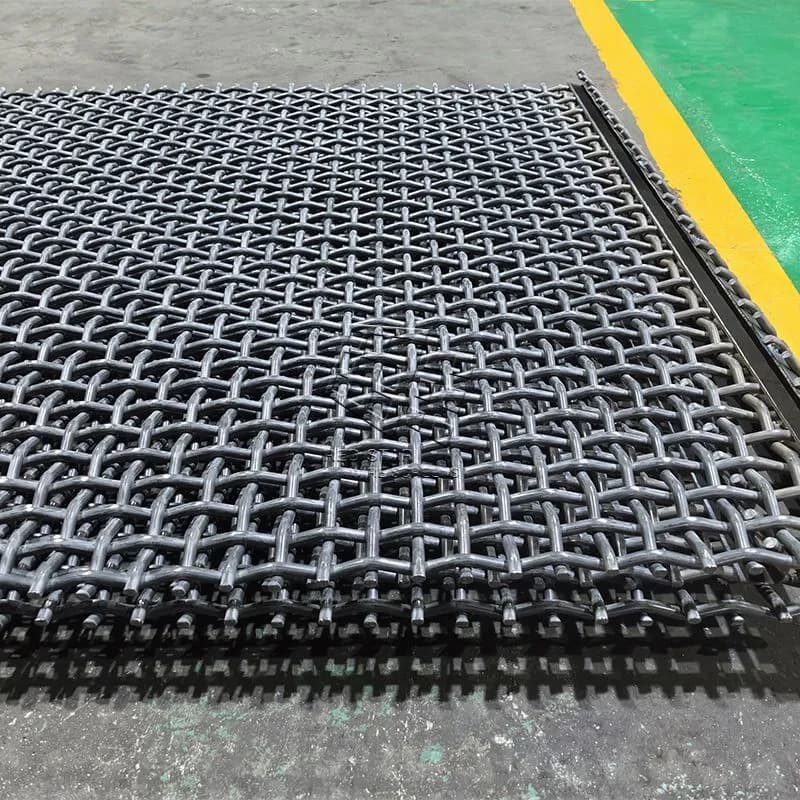
The process begins with drawing metal into thin wires of specific diameters.
Next, these wires are woven using advanced machinery to create the mesh pattern.
Finally, the mesh undergoes treatments like coating, cutting, and polishing to enhance performance and appearance.
A metal woven wire mesh screen is widely used in industries such as mining, oil refining, and chemical processing. It’s essential for filtration, sieving, and separation processes.
Architects love using metal woven wire mesh screen for facades, ceilings, and partitions. It adds a modern, industrial aesthetic while maintaining functionality.
Farmers use it for fencing and animal enclosures. Environmental engineers use it in water filtration systems.
Other notable uses include:
Food processing filtration
Air ventilation systems
Security barriers
Automotive components
Pharmaceutical sieving
Although the initial investment might seem high, a metal woven wire mesh screen lasts for years, making it cost-effective in the long run.
These screens are built to last. With proper care, they can function efficiently for decades.
Maintenance is minimal. Regular cleaning is usually enough to keep it in top condition.
Mesh size determines what particles can pass through. Choosing the right size is critical for performance.
Different environments require different materials. For example, stainless steel is ideal for corrosive environments.
Always consider the specific use case. Whether it’s filtration or protection, your needs will guide your choice.
Use mild cleaning agents and avoid abrasive tools to prevent damage.
Store in a dry, clean environment to avoid corrosion and contamination.
Choosing the wrong mesh size
Ignoring environmental conditions
Skipping regular maintenance
Using low-quality materials
Avoiding these mistakes can significantly extend the life of your metal woven wire mesh screen.
Its main purpose is filtration, separation, and protection in various industrial and commercial applications.
With proper maintenance, it can last for decades.
Yes, it can be tailored in terms of size, material, and weave type.
Absolutely, especially if made from corrosion-resistant materials like stainless steel.
Use mild soap and water, and avoid harsh chemicals.
Industries like construction, mining, agriculture, and food processing heavily rely on it.
The metal woven wire mesh screen is more than just a simple material—it’s a powerhouse of functionality and reliability. From industrial filtration to architectural design, its applications are vast and ever-growing.
By understanding its types, materials, and uses, you can make informed decisions and maximize its benefits. Whether you’re an engineer, architect, or business owner, investing in the right metal woven wire mesh screen can significantly enhance your operations.
131
0
0

Comments
All Comments (0)