

Your Position: Home - Construction & Real Estate - Aluminium Composite Panel vs Calcium Silicate Board: Which Exterior Wall Panel System Is Better?
Choosing the right exterior wall panel system is a critical decision for modern construction projects. Aluminium composite panels and calcium silicate boards are two popular solutions used for exterior wall decoration, insulation, and facade improvement.
Although both materials can create attractive and durable building exteriors, they have different characteristics in terms of appearance, thermal performance, fire resistance, installation methods, and application scenarios.
This guide compares aluminium composite panels and calcium silicate boards to help architects, contractors, developers, and project owners select the most suitable exterior wall panel solution.
Aluminium Composite Panel (ACP) is a lightweight facade material consisting of aluminium layers combined with a core material. It is widely used in commercial buildings, office buildings, shopping centers, hotels, and modern architectural projects.
With excellent surface finishing options, aluminium composite panels provide a clean and contemporary appearance while offering advantages such as lightweight structure, weather resistance, and flexible design possibilities.
For projects requiring a modern metallic facade appearance and customized colors, aluminium composite panels are often an ideal choice.
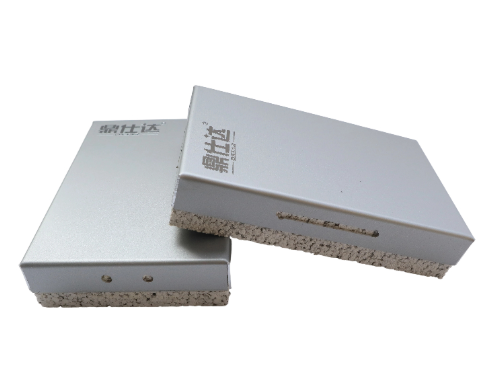
Calcium silicate board is a high-performance inorganic building material made from cementitious materials, silica, and reinforcing fibers.
It is widely applied in exterior wall insulation and decoration systems because of its excellent fire resistance, dimensional stability, and durability.
Calcium silicate integrated exterior wall panels combine insulation and decorative functions, making them suitable for residential buildings, public facilities, and energy-efficient construction projects.
| Comparison Factor | Aluminium Composite Panel | Calcium Silicate Board |
|---|---|---|
| Material Structure | Aluminium layers with composite core | Fiber reinforced calcium silicate material |
| Appearance | Modern metal finish, smooth surface, various colors | Stone texture, natural appearance, multiple surface finishes |
| Weight | Lightweight and easy to handle | Slightly heavier with strong rigidity |
| Weather Resistance | Excellent resistance to rain, UV, and corrosion | Excellent durability under outdoor conditions |
| Fire Performance | Depends on core material selection | Excellent fire resistance due to inorganic composition |
| Thermal Insulation | Requires integration with insulation layer | Designed for integrated insulation systems |
| Installation Speed | Fast dry installation | Fast prefabricated installation |
| Design Flexibility | High customization capability | Suitable for natural texture and architectural styles |
| Maintenance | Low maintenance requirements | Stable long-term performance |
| Application Focus | Commercial and modern facade projects | Energy-efficient and fire-conscious buildings |
One of the biggest advantages of aluminium composite panels is their design flexibility.
They can be customized with:
· Various colors
· Metallic finishes
· Wood grain effects
· Stone patterns
· Customized surface coatings
This makes aluminium composite panels widely used in:
· Commercial buildings
· Shopping malls
· Office towers
· Brand buildings
For architects looking for a modern and customized facade design, aluminium composite panels provide more creative possibilities.
Calcium silicate boards are often selected for projects requiring a natural stone-like appearance or textured facade design.
Advantages include:
· Natural decorative effects
· Stable surface performance
· Suitable for large-scale residential projects
They are commonly used in:
· Residential communities
· Schools
· Hospitals
· Public buildings
Energy efficiency has become an important requirement for modern buildings.
Aluminium composite panels themselves mainly provide decorative and protective functions.
For exterior insulation projects, they are usually combined with:
· Rock wool insulation
· PU insulation
· Other thermal insulation materials
The complete system provides:
· Thermal protection
· Weather resistance
· Decorative finishing
Calcium silicate integrated panels are designed as a complete insulation decoration solution.
They combine:
· Insulation layer
· Decorative layer
· Protective layer
Benefits:
· Reduced installation procedures
· Improved construction efficiency
· Better overall facade performance
Fire safety is an important factor when selecting exterior wall materials.
Calcium silicate board has excellent fire resistance because it is an inorganic material.
It is commonly selected for projects requiring:
· Higher fire safety standards
· Public buildings
· High-rise residential projects
The fire performance of aluminium composite panels depends largely on the core material.
For construction projects, fire-rated cores and certified systems should be selected according to local building regulations.
Advantages:
· Lightweight panels
· Easy transportation
· Flexible installation methods
· Suitable for complex facade designs
Common installation methods:
· Dry hanging system
· Frame fixing system
Advantages:
· Factory-integrated structure
· Faster construction process
· Reduced onsite procedures
It helps contractors reduce:
· Labor requirements
· Construction time
· Installation complexity
Recommended for:
· Office buildings
· Shopping centers
· Hotels
· Corporate headquarters
· Brand buildings
· Exhibition centers
Recommended for:
· Apartments
· Housing developments
· Schools
· Hospitals
· Government buildings
The best choice depends on your project requirements.
✔ Modern facade appearance
✔ Customized colors and finishes
✔ Lightweight construction
✔ Commercial building applications
✔ Flexible architectural design
✔ Excellent fire resistance
✔ Integrated insulation performance
✔ Natural decorative appearance
✔ Residential and public building applications
✔ Energy-efficient facade solutions
As a professional manufacturer of exterior insulation decorative panels, Dstar provides customized facade solutions including:
· Aluminium insulated composite panel systems
· Calcium silicate integrated exterior wall panels
· Metal insulated composite panel systems
· Thin porcelain insulated composite systems
With professional manufacturing capability and customized solutions, Dstar helps global construction partners improve building energy efficiency, facade appearance, and installation efficiency.
Whether you are designing a commercial building, residential project, or industrial facility, our team can provide suitable exterior wall insulation and decoration solutions according to your project requirements.
Contact Dstar today to discuss your exterior wall panel solution.
38
0
0

Comments
All Comments (0)